
As your production processes become more complex, skilled labour becomes scarce, and expectations for quality and delivery reliability continue to rise, standard automation solutions quickly reach their limits.
With tailored automation engineering for special-purpose machinery and custom automation solutions, you can establish stable, predictable and scalable processes – precisely aligned with your specific requirements and industrial environment.
You gain a clear understanding of the opportunities industrial automation offers, where it truly adds value, and how economically viable, future-proof automation solutions can be realised.
Explore automation opportunities and solutions »
Discuss your requirements with our experts – no obligation »
Full-Service Machinery Engineering
from a Single Source
seamlessly integrated services across the entire project lifecycle

All Departments
In-House
Mechanical design, software development, assembly and field service – all delivered in-house

Complete Machinery Solutions
Instead of Isolated Standalone Systems
Custom-built machines and automation systems tailored precisely to your production processes

End-to-End
Project Responsibility
Clear processes, short communication paths, precise coordination and on-time delivery of your machinery solutions
Many production managers today clearly feel how rapidly manufacturing requirements are changing. Volumes are becoming more volatile, product variants are increasing, and at the same time it is becoming increasingly difficult to fill open positions with qualified skilled workers.
As a result, automation is no longer just an efficiency initiative for many companies. It is increasingly becoming a key lever to keep production stable, predictable and competitive in the long term.
As production processes become more complex, pressure on quality, delivery reliability and cost-efficiency continues to rise. At the same time, many organisations lack the skilled workforce required to sustain manual processes reliably over time.
This is where industrial automation and custom machinery can play a decisive role. It helps to:
For many companies, the goal is not to automate as much as possible, but to apply automation where it creates real value.
The importance of industrial production for innovation and competitiveness is also emphasised by the German Mechanical Engineering Industry Association (VDMA). Its President, Bertram Kawlath, summarises the role of industrial value creation:
“Germany as an industrial location thrives on innovation. And innovation only takes place where production happens.”
Bertram Kawlath, President of the VDMA (Source: https://www.nc-fertigung.de/vdma-warnt-vor-abwanderung-von-produktion-und-innovation)
For companies, this translates into a clear implication: those who modernise and automate their production lay the foundation for long-term competitiveness.
Research also delivers a consistent message. Publications in the field of production engineering at the Technical University of Munich highlight the critical role of advanced manufacturing technologies in shaping the future of industrial production:
“Production engineering is a decisive factor in advancing industrial value creation in times of global challenges.”
Research in production engineering, Technical University of Munich (Source: https://mediatum.ub.tum.de/doc/1738795/1738795.pdf)
This is exactly where modern automation engineering for custom machinery and special-purpose machinery comes into play:
designing production processes that run reliably, remain flexible and operate efficiently.
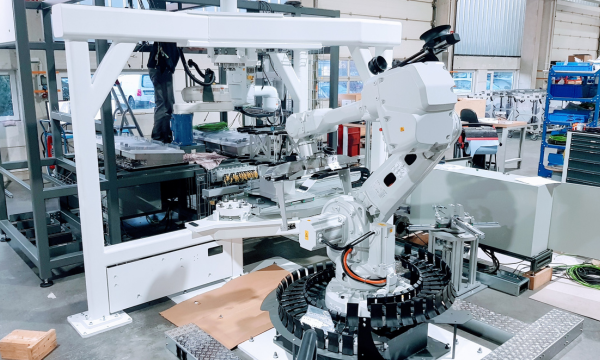
Today, automation is no longer a future vision, but a practical response to the challenges that many production managers face on a daily basis.
This is precisely where automation engineering for custom machinery and special-purpose machinery comes into play.
At esmo automation, we do not develop standard solutions, but custom-built machinery and automation systems designed around real production processes – not the other way around.
For over 25 years, we have been developing special-purpose machinery that delivers where standard equipment reaches its limits:
machinery that stabilises processes, relieves employees and reduces production costs sustainably.


















Let’s discuss where automation truly adds value in your production environment »
This is the core of automation engineering and special-purpose machinery: the development of custom machinery and automated systems designed to optimise production processes when standard equipment no longer meets a company’s requirements.
To achieve this, a range of technologies are combined, for example:
The objective is always the same: stable, repeatable and cost-efficient production processes.
Especially for complex products, high product variability or demanding cycle times, this approach enables solutions that standard machinery cannot deliver.
This is exactly where our expertise lies.
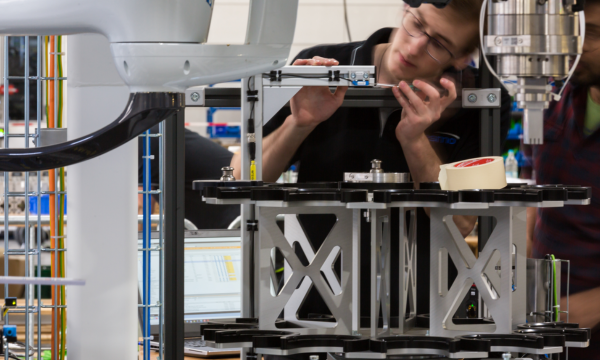
Automation projects in special-purpose machinery typically involve multiple disciplines. That is why we combine a broad range of expertise under one roof – from engineering and machinery development to the implementation of complete production systems.
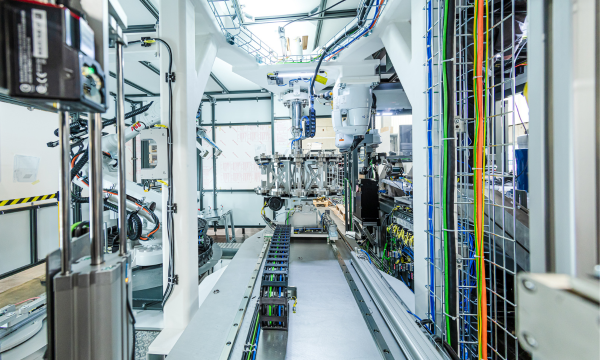
Special-purpose machinery forms the core of many automation engineering projects. It involves the development of custom machinery tailored precisely to a specific production process.
Typical applications include:
Special-purpose machinery is primarily used where standard equipment reaches its technical or economic limits.
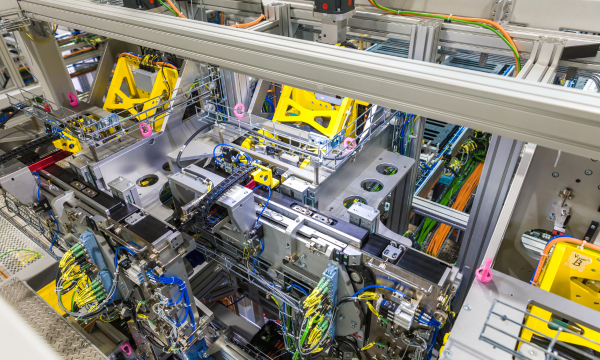
Many automation projects go beyond individual machines. In such cases, integrated machinery systems are developed, linking multiple production steps into a continuous, end-to-end process.
Machinery and plant engineering typically includes:
The result: more stable, efficient and predictable production processes.
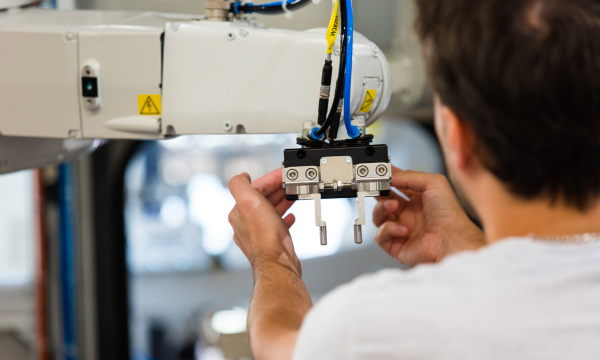
The success of an automation solution is often determined as early as the concept phase. That is why engineering plays a central role in automation projects for custom and special-purpose machinery.
This typically includes:
The objective is to develop a solution that is both technically reliable and economically viable.
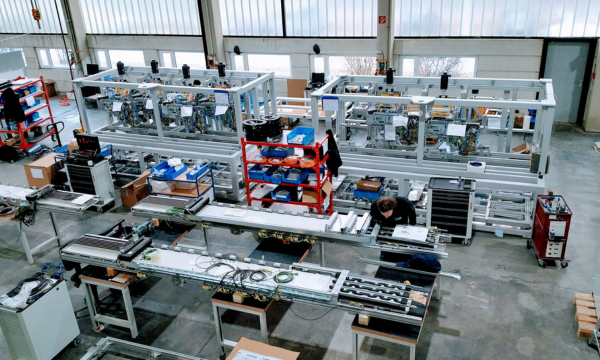
Not every automation project starts with a new development.
In build-to-print projects, we precisely implement existing designs or technical specifications and take responsibility for manufacturing, assembly and system integration.
Companies benefit from:
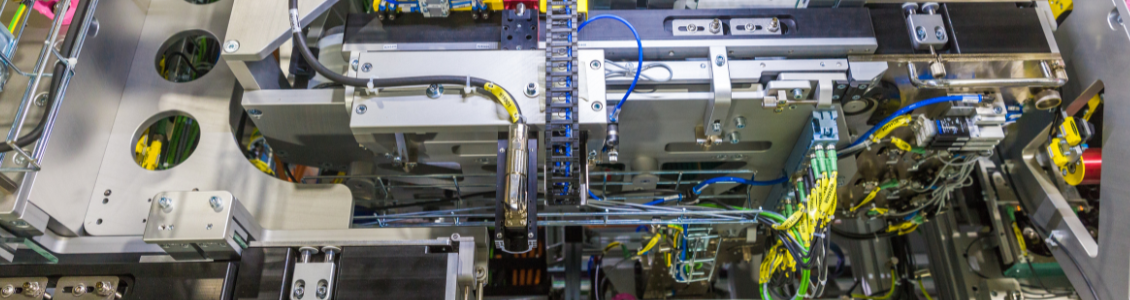
Automation is often associated with increased efficiency. In practice, however, a range of factors drive the use of automation in industrial machinery and production systems.
Automated production processes reduce dependence on manual operations and help maintain stable production capacity and reliable output.
Many manual tasks can now be handled by automated systems, allowing skilled workers to focus on higher-value and more specialised activities.
Automated testing and assembly processes deliver repeatable results and reduce scrap rates.
Stable processes lead to lower cost per unit over the long term and improved equipment availability.
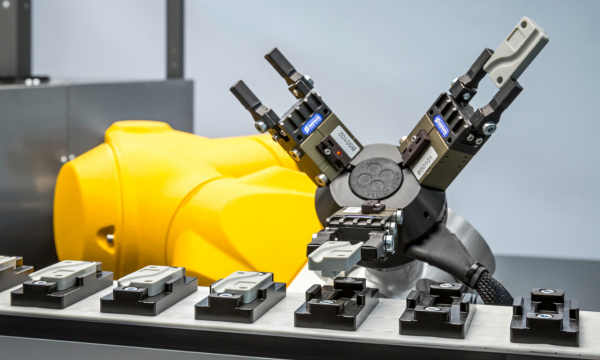
Custom automation solutions are most commonly applied in the following production processes:
Such automated processes ensure consistent quality and stable production workflows.
In many production environments, individual machines operate reliably – yet delays still occur across the overall process.
The reason is often a lack of coordination between individual stations.
Integrated machinery systems link multiple production steps into a continuous, end-to-end process.
This results in:
Especially in complex manufacturing environments, this is where the greatest economic impact is achieved.
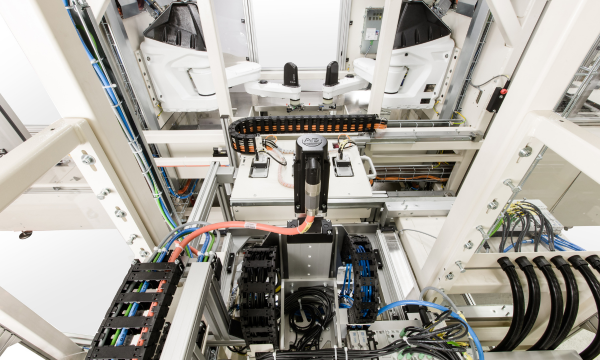
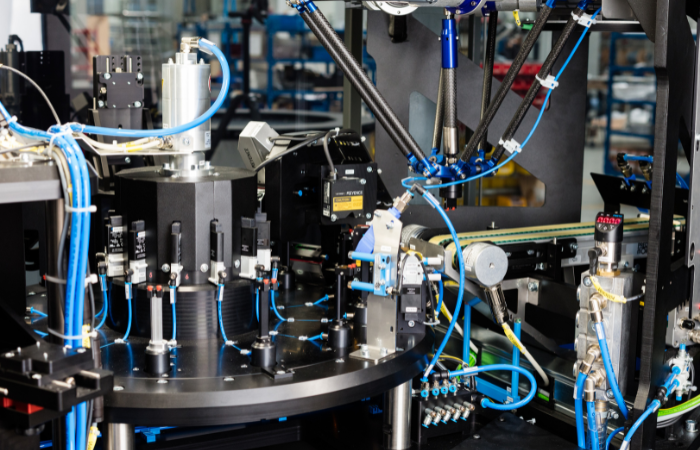
Automation in special-purpose machinery is used across a wide range of industries, including:
Wherever high quality requirements, complex products or large production volumes come together, custom special-purpose machinery offers decisive advantages.
Automation is particularly beneficial for high production volumes, complex assembly processes, increasing quality requirements, or when skilled labour for manual tasks is limited.
Standard machines are produced in series and designed for general applications. Special-purpose machinery, by contrast, is custom-developed for a specific production process and tailored to a company’s individual requirements.
Typical technologies include:
![[Translate to Englisch:] Weltkarte mit den internationalen Standorten von esmo, einschließlich esmo USA in Kalifornien, esmo Germany HQ in Rosenheim/Raubling, esmo China in Shanghai, esmo Taiwan in Zhubei, esmo Asia in Singapur sowie Points of Contact in Indien, Thailand, Korea und den Philippinen.](/automation/fileadmin/_processed_/9/5/csm_esmo-worldmap-2025-esmo-automation_9c492a4b63.png "[Translate to Englisch:] Globale Standorte und Niederlassungen von esmo")